Spanish
  English
You sit at the kitchen table, staring at the Medicaid denial letter in your hands. Your spouse, head in hands, looks just as overwhelmed as you feel. After weeks—maybe months—of gathering documents and hoping for approval, this letter feels like a punch to the gut. How are you supposed to afford the care you need now? If you’re searching for what to do if Medicaid is denied, you’re not alone.
This guide is for Florida residents who have received a Medicaid denial and want to know their next steps. We will cover reasons for denial, how to appeal, and how to reapply. While a Medicaid denial in Boca Raton can feel like a devastating roadblock, it doesn’t have to be the end of the line. There are ways to fight back, whether the issue is missing paperwork, income limits, or eligibility criteria. You can challenge the decision, correct mistakes and take steps to get the benefits you need.
This blog will explain what to do if you’ve been denied Medicaid, offering practical steps to help you move forward with clarity and CONFIDENCE.

Summary: Main Options After a Medicaid Denial
If you receive a Medicaid denial in Florida, you have several options:
-
Appeal the Denial: You can appeal a Medicaid denial within 30 to 90 days after receiving the notice. Each state must provide an opportunity to appeal, and successful appeals can result in retroactive benefits to the application date. (Fact References: 1, 2, 3, 4, 16, 22, 23)
-
Request a Reversal for Minor Errors: If your denial was due to a minor error or missing paperwork, you can request an informal reversal. This is often the fastest way to correct a denial, sometimes taking days instead of months, and can grant retroactive coverage to your original application date. (Fact References: 6, 7, 8, 9, 19, 20, 21)
-
Reapply After Correcting Issues: You may reapply for Medicaid immediately after a denial, especially if you have corrected the issue (such as excess assets or income). Reapplying resets the application date for benefits and is recommended after addressing denial issues. (Fact References: 11, 12, 13, 14, 15)
-
Gather Supporting Documentation: Whether appealing or reapplying, gather evidence such as pay stubs and medical records to support your case. Submitting supporting documentation is often required to challenge the decision. (Fact References: 5, 17, 18, 24)
For a free legal consultation, call 561-955-8515
What to Do If Medicaid Is Denied: Review the Denial Notice Carefully
The first step is to read the denial letter thoroughly and review why a Medicaid application denied decision was issued. A Medicaid denial letter states the reason for denial. Florida’s Department of Children and Families (DCF) must provide a written explanation detailing why your Medicaid application was denied. Common reasons include:
-
Income or assets exceeding the eligibility limits
-
Missing required documentation or other missing paperwork
-
Failure to meet residency or citizenship requirements
-
Issues related to medical necessity for long-term care programs
Understanding the specific reason for your denial, including whether it involves Medicaid eligibility criteria or other application issues, will help you decide whether to appeal, correct mistakes or reapply.
Common Reasons for Medicaid Denial in Florida
Common reasons for Medicaid application denials include missing documents and incomplete information. Even small mistakes can lead to denial. Here are some of the most frequent reasons, including issues with financial eligibility and supporting documentation:
-
Income and Asset Limits for Medicaid Eligibility: Florida’s Medicaid program has strict asset limits and an income limit. For 2025, an individual applying for long-term care Medicaid must have income below $2,901 per month and countable assets under $2,000 to meet the financial requirements; if not, the applicant is not financially eligible. If your income or assets exceed these thresholds, you may need to explore legal strategies to restructure your finances, including ways to lower income where appropriate, so you can become Medicaid eligible. For example, if you receive a pension that pushes your income over the limit, you might set up a Qualified Income Trust to redirect excess income. Similarly, liquidating non-exempt assets to pay off debts or purchasing exempt assets, such as a primary residence or vehicle, can bring you within eligibility limits.
-
Incomplete or Incorrect Documentation: Missing documents and incomplete information are common reasons for Medicaid application denials. A simple clerical error or missing documentation is a common reason for denial. Missing bank statements, incomplete medical records or incorrect application forms can trigger a rejection. Double-check that you submit all required documentation before resubmitting. For instance, your application may be denied if you fail to submit proof of residency, like a utility bill or lease agreement, or ownership records such as property deeds. Ensuring that all forms are filled out accurately and supporting documents are up-to-date can prevent unnecessary delays.
-
Medical Necessity Not Established: Applicants must demonstrate a medical need for long-term care Medicaid for nursing home-level care. Your application may be denied if it does not include sufficient medical documentation. Comprehensive medical records from your physician, including detailed assessments and care plans, can strengthen your case. You may also consider obtaining a second medical opinion if your initial documentation was deemed insufficient.
-
Residency or Citizenship Issues: Medicaid in Florida requires proof of U.S. citizenship or lawful residency and Florida residency, and in some cases the residency review can also be affected by marital status. If your documentation doesn’t clearly establish this, your application may be denied. Common issues include submitting expired identification or incomplete paperwork. Make sure your documents are current and show that you meet the eligibility requirements.
Click to contact our estate planning lawyers today
Medicaid Planning Strategies for Income or Asset Issues
If your Medicaid denial is due to excess income, assets, or other financial eligibility issues under the Medicaid application process, consider legal strategies to adjust your financial situation while preserving your resources. An elder law attorney can help you use planning strategies to become financially eligible again after denial.
Income Trusts (Miller Trusts)
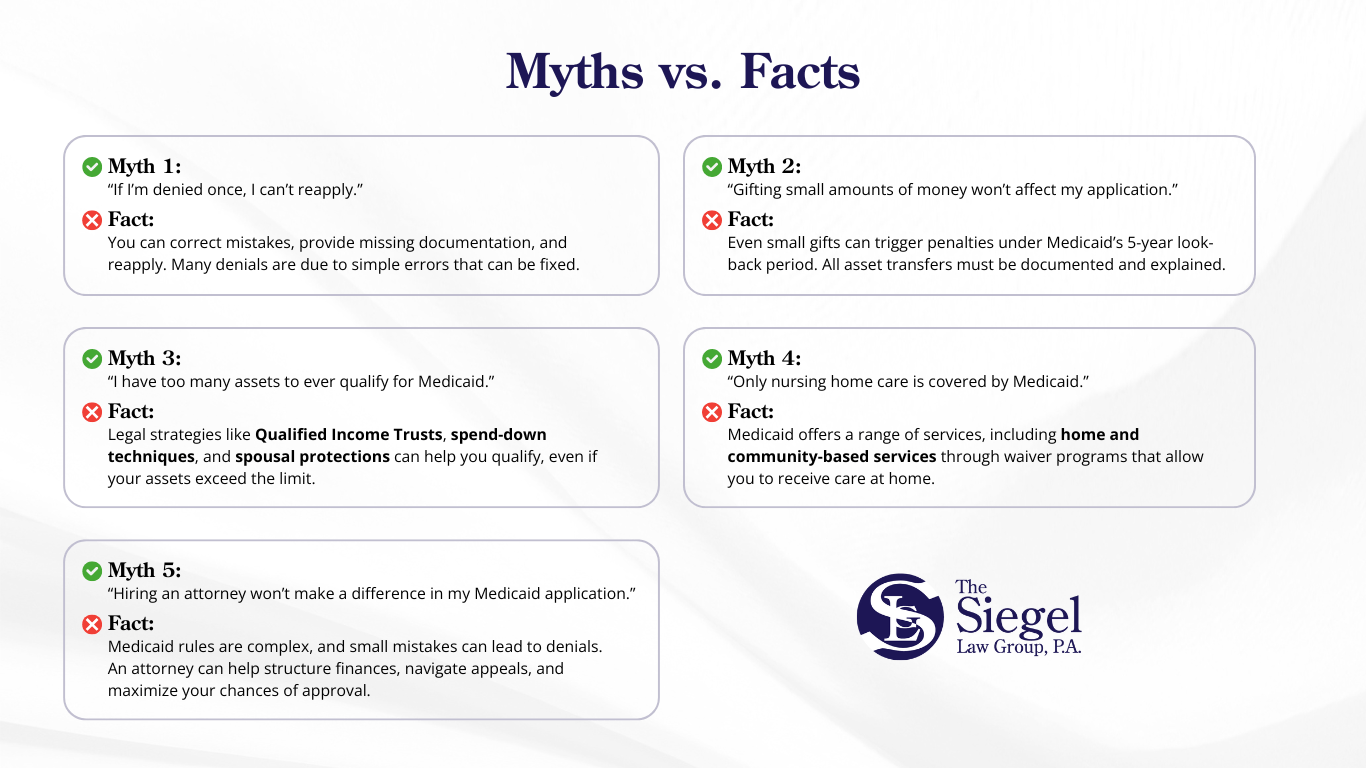
In Florida, if your income exceeds Medicaid’s limit, you can set up a Qualified Income Trust (also known as a Miller Trust). This trust allows you to deposit income over the limit into the trust, making you eligible for Medicaid.
Setting up a Miller Trust requires precise documentation and ongoing management. You’ll need to open a separate bank account for the trust and designate a trustee to manage the funds. It’s crucial to deposit any excess income promptly each month to maintain eligibility.
Spousal Protections
Florida follows federal spousal impoverishment rules, allowing the non-applicant spouse to retain a certain amount of income and assets. This can protect your spouse’s financial well-being while qualifying you for Medicaid.
For 2025, the Community Spouse Resource Allowance (CSRA) allows the non-applicant spouse to keep up to $157,920 in assets. Additionally, the Monthly Maintenance Needs Allowance (MMNA) ensures the non-applicant spouse can retain a minimum monthly income, typically around $2,555.
Asset Spend-Down Strategies
Legally spending down excess assets on non-countable items—such as home improvements, medical expenses, or purchasing a prepaid funeral plan—can help bring your assets within Medicaid limits.
For example, upgrading your primary residence, purchasing a new car or paying off debts are acceptable ways to reduce countable assets without jeopardizing eligibility and can help an applicant satisfy Medicaid financial requirements before a new filing.

Establishing Irrevocable Trusts
Placing assets into an Irrevocable Trust can help reduce your countable assets. However, this strategy must be used carefully due to Medicaid’s five-year look-back period, which examines asset transfers.
Transferring assets into an irrevocable trust more than five years before applying for Medicaid can protect those assets from being counted. However, any transfers made within the five-year period may trigger penalties, delaying your eligibility.
Click to contact our estate planning lawyers today
Complete a Free Case Evaluation form now
How Medicaid’s Look-Back Period Affects Your Application
Medicaid enforces a five-year look-back period for Medicaid applications, meaning any asset transfers made within five years of applying will be scrutinized.
What Is the Look-Back Period?
The look-back period intends to prevent applicants from giving away assets to qualify for Medicaid. If you transferred assets for less than the fair market value during this time, you could face a penalty period, delaying your eligibility.
Common Look-Back Period Issues
-
Gifting Assets to Family: Even small gifts to children or other relatives can trigger penalties.
-
Transferring Property Below Market Value: Selling a home or other assets for less than their market value can result in disqualification.
-
Undocumented Transfers: Failing to provide documentation for asset transfers may raise red flags during the review process.
How to Address Look-Back Period Issues
If you’ve made transfers that could impact your eligibility, consult a Florida Medicaid attorney. They can help you strategize to mitigate penalties, such as proving that you made transfers for reasons unrelated to Medicaid eligibility.
Complete a Free Case Evaluation form now
Correcting Mistakes and Reapplying
If your denial was due to missing information or simple errors—or was denied correctly based on the original filing—correcting the issue and filing again may be the fastest way to obtain Medicaid coverage, with re application sometimes making more sense than an appeal once the problem has been fixed.
Steps to Reapply
-
Identify the Issue: Use the denial letter to determine whether the denial resulted from missing paperwork, financial eligibility issues, or another correctable problem.
-
Fix the Problem: Gather missing documents, correct inaccuracies, and complete all forms.
-
Submit a New Application: If needed, re-apply through the ACCESS Florida portal or at a local DCF office.
If circumstances change after the initial application—such as a reduction in income or assets—be sure to reflect those updates accurately in your new filing.
Tips for a Successful Reapplication
-
Stay Organized: Keep copies of all submitted documents and correspondence.
-
Double-check Details: Review every section of your application for completeness.
-
Consult Professionals: Consider seeking advice from a Florida Medicaid attorney or a professional Medicaid planner if you need help correcting complex financial issues before refiling.
If you’ve reviewed your application and everything appears correct but you still received a denial, it may be time to reapply if the issue has been fixed or appeal the decision and present your case for reconsideration.
How to Appeal a Medicaid Denial in Florida
If your Medicaid Long-Term Care application was denied, you have the right to appeal the decision through a Medicaid fair hearing, which is the formal appeal available after a denial. Florida law allows you 90 days from the date on your denial notice to request a Fair Hearing through the Agency for Health Care Administration (AHCA), and once your request is filed, the agency will later assign a hearing date.
Steps to File a Medicaid Fair Hearing Appeal
-
Request a Fair Hearing: Submit a written request to the Office of Fair Hearings as your formal appeal. You can mail your request, submit it in person or use the DCF online portal to initiate the process.
-
Gather Supporting Documents: Collect any additional or corrected documentation that addresses the reasons for your denial, such as updated financial statements, medical reports or proof of residency. This is especially important if the denial resulted from missing paperwork or a simple mistake by the Medicaid caseworker.
-
Prepare for the Hearing: The hearing is your opportunity to present evidence and explain why the applicant believes the denial was wrong or based on an agency error. You may call witnesses or present documents that support your eligibility, including records showing an issue that should be escalated to the caseworker’s supervisor. While you can represent yourself, some applicants find it helpful to work with a Medicaid attorney familiar with Medicaid appeals.
-
Attend the Hearing: Hearings may be conducted in person, over the phone or through video conferencing. During the hearing, you’ll have the chance to present your case and respond to questions from the hearing officer.
-
Await the Decision: After the hearing, you will receive a written decision in the mail. If the outcome remains unfavorable, you may have the option to seek judicial review through the court system.

What to Do If You’re Denied After an Appeal
Reapply with New Information
If your circumstances have changed—for example, if your income has decreased or your health condition has worsened—you may submit a new application with updated information. However, because Florida does not offer traditional retroactive coverage for non-pregnant adults, delaying a new application will result in a permanent loss of coverage for earlier months. In these situations, moving forward with an immediate appeal of a prior denial—backed by fresh evidence like pay stubs and medical records—is often the only way to protect coverage for past medical bills.
Judicial Review
You can request a judicial review of your case in Florida’s administrative court system. This process involves a judge reviewing the appeal decision to determine if it was made in accordance with the law. Something to consider: Medicaid protects individuals with fair hearing rights to challenge denials or changes in benefits.
Explore Alternative Benefits
If Medicaid continues to deny your application, consider alternative programs, such as Florida’s Statewide Medicaid Managed Care Long-Term Care Program or local county health services that offer support to low-income residents.
Medicaid Waiver Programs in Florida
Florida offers Medicaid waiver programs, which are part of the state’s broader Medicaid system and can provide community based services. These programs provide more flexible care options, allowing certain individuals to receive services at home or in the community instead of in institutional settings.
How Waivers Differ from Standard Medicaid
While traditional Medicaid may include nursing home Medicaid for people who meet level-of-care rules, waiver programs are designed to help individuals remain in their homes. Eligibility may vary and financial limits can differ from standard Medicaid.
When to Consider an Elder Law Attorney for Legal Guidance
While some applicants can handle a Medicaid denial on their own, complex cases involving Medicaid rules, financial eligibility questions, or hearing preparation often require professional guidance. Medicaid laws are complicated and making mistakes can result in further delays or additional denials.
Consulting with an elder law attorney in Boca Raton can help you develop a tailored legal strategy for denials, appeals, and planning that fits your unique situation. They can guide you through appeals, reapplications and financial planning to maximize your chances of approval.
Choosing the Right Medicaid Attorney
Not all attorneys are the same. Selecting the right Florida Medicaid attorney can make a significant difference when a denial puts benefits worth tens of thousands of dollars at stake. When evaluating counsel, consider both the attorney’s appeal strategy and experience with the Medicaid application process. Here are some factors to consider:
Qualifications to Look For:
-
Experience in Medicaid Law: Choose an experienced elder law attorney with a proven track record in Medicaid planning, appeals, and Florida eligibility criteria, which can be especially important in formal hearings.
-
Understanding of Medicaid Rules: Ensure the attorney is well-versed in Florida Medicaid rules.
-
Transparent Fees: Look for clear, upfront pricing without hidden costs.
-
Client Reviews and Testimonials: Research feedback from previous clients to gauge the attorney’s reliability and effectiveness.
Questions to Ask During a Consultation:
-
How many Medicaid cases have you handled in Florida?
-
What strategies do you recommend for my specific situation?
-
Can you assist with both the application and appeal process?
-
What are your fees and what services do they cover?
Being denied Medicaid in Boca Raton isn’t the end of your journey. Whether the denial stems from income limits, paperwork errors, or medical necessity issues, there are clear steps you can take to address the problem. From filing an appeal to reapplying with corrected documentation or using legal strategies to adjust your finances, you have options to pursue the benefits you need.

Don’t Let a Medicaid Denial Define Your Future
Receiving a Medicaid denial letter can feel like the rug has been pulled out from under you. But you don’t have to face this challenge alone. At The Siegel Law Group, P.A., we understand the stress and frustration that comes with trying to secure the care you or your loved one needs. Our compassionate Boca Raton Medicaid Planning attorneys are here to help you navigate the appeals process and find solutions tailored to your unique situation.
With 100 years of combined experience, we’ll work closely with you to correct application errors, protect your assets and fight for the benefits you may be eligible to receive. Whether you’re appealing a denial or exploring other long-term care options, we’re committed to supporting you every step of the way.
Your search for a “Medicaid Planning lawyer near me” led you here—and that’s the first step toward securing the help you need. Call The Siegel Law Group, P.A. at or fill out our confidential online form to schedule your complimentary consultation.
While you wait for your consultation, we invite you to download our FREE E-book, “7 Steps to Make Sure Your Estate Plan is in Order.”
Here for you and by your side 24/7 to PROTECT WHAT MATTERS!
Copyright © 2025. The Siegel Law Group, P.A. All rights reserved.
The information in this blog post (“post”) is provided for general informational purposes only and may not reflect the current law in your jurisdiction. No information in this post should be construed as legal advice from the individual author or the law firm, nor is it intended to be a substitute for legal counsel on any subject matter. No reader of this post should act or refrain from acting based on any information included in or accessible through this post without seeking the appropriate legal or other professional advice on the particular facts and circumstances at issue from a lawyer licensed in the recipient’s state, country or other appropriate licensing jurisdiction.
The Siegel Law Group, P.A.
2500 N Military Trail Suite 470 Boca Raton, FL 33431 siegellawgroup.com
Call or text 561-955-8515 or complete a Free Case Evaluation form